
How to Write a Great Print Brief
The Guide to Exceptional Print Campaigns
In a world of fragmented media channels, shrinking attention spans and increasingly complex customer journeys, great print remains one of the most powerful tools in the marketing mix.
From luxury brochures and high-impact direct mail to retail POS, packaging, catalogues and campaign collateral, print is a trusted medium and a critical part of the communication funnel in every successful campaign.
Recent studies conducted by the IPIA, show print has a 99.1% net positive sentiment from consumers.
Delivering consistent messages with authenticity across multiple brand touch points can be challenging for brands and marketing agencies. To build consumer trust in a world where attention is fractured across an increasing array of digital platforms, share of voice and search is becoming harder to achieve every day.
Marketers need to consider the best media mix to use for optimum visibility and impact, and there is compelling evidence that print should form a consistent part of any multi-channel strategy. It’s not about just digital or just print – it’s about combining the different media in campaigns to land the best connection and action from the audience you are targeting.
Why use print in campaigns?
Bringing print into your communications planning gives an added dimension; connecting beyond the reach of digital communications with tangible materials your customers and clients can really trust.
Increased commitment: the effort and resources required to create and distribute print materials signal credibility, reinforcing trust in your brand, product or service.
Deeper connections: the physical nature of print fosters a stronger emotional connection with consumers compared to digital media, which can be easily missed or dismissed.
Younger audiences embrace print: a surprising 82% of Millennials in the IPIA research expressed higher trust in print marketing over digital advertising.
Information retention and recall: consumers engage more deeply with print, leading to better recall and long-term loyalty.
How to plan exceptional print for campaigns
The difference between a print job that merely “looks okay” and one that delivers genuine impact, connection and recall often comes down to one thing: the quality of the brief.
For those in marketing, communications and any form of advertising, writing a strong print brief is essential to ensuring clients get exactly what they imagined — creatively, technically and commercially.
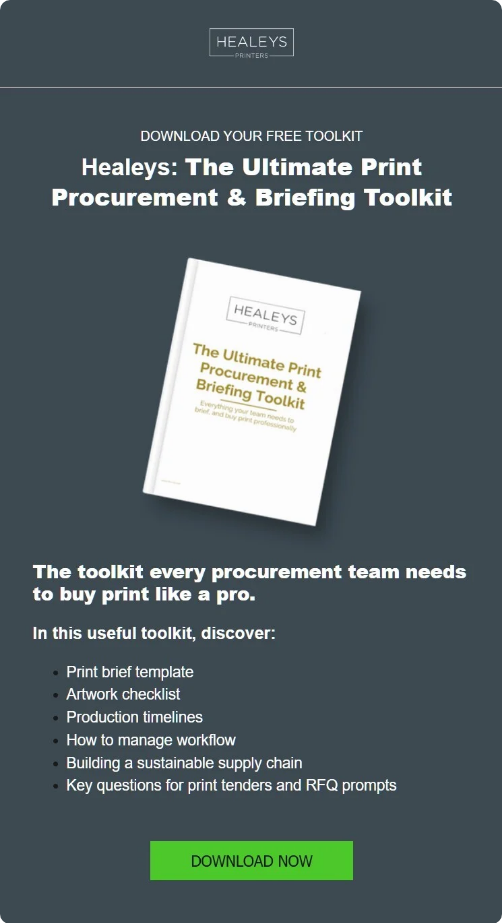
The ultimate toolkit: Buy print like a pro
Not everyone buys print regularly and when you do, it's likely you rely on a previous project to guide you. So much is possible and the best campaigns which include print, integrate print into communications plans to deliver connected customer journeys.
It's why we created The Ultimate Print Procurement & Briefing Toolkit. This toolkit explains how to write a better print specification or tender brief if you're searching for a print partner, what information printers actually need, common mistakes to avoid and how the right print partner can elevate creative ideas from concept to reality. We've even provided a production timeline so you can plan around your deadlines!
Why the print brief matters more than ever
Print production is highly sophisticated. It is digital, streamlined and anything is possible! Whether you need a short run of work with personalisation and variable data, to complex finishes and embellishments, working closely with your print partner is the best way to brief what you need and discover where your project can go.
Working across multiple channels?
Need different applications for retail and experiential? Big deadlines to meet? From whether you need to hit Pantone matched branding, multi-location distribution and a schedule to meet, the more information your print partner has, the better.
Working with the right business means you can also pin point the right sustainable materials and measurement, critical for corporate reporting.
The fall out from briefing that doesn’t clarify the important areas means you risk incorrect specifications, colour inconsistencies, budget overrun, delays and misaligned expectations. The worst case is compromised creative outcomes.
A great brief ensures everyone - agency, client and printer - are aligned from the start. If you’re lucky enough to have an in house print buyer or experienced studio manager, you’re likely to have a great briefing template but no one expects you to be the expert – it’s what you
It also allows your print partner to do what they do best: collaborate, advise and enhance the idea.
The golden rules of print briefing
The best print projects are collaborative. The earlier your printer is involved, the better the outcome usually becomes.
At Healeys, collaboration at the ideas stage is often where the biggest creative and commercial wins happen. Whether it’s recommending a more effective stock, engineering a premium finish within budget or finding a smarter production route, involving print expertise early can significantly improve the final result.
That’s why agencies increasingly see Healeys not simply as a supplier — but as an extension of their creative and production team.
What every great print brief should include
1. What do you want to produce?
Start with the fundamentals. Clearly explain what the project actually is. For example, you can simply give a name or description to help pin point what you’re looking to produce.
- Luxury brochure
- Direct mail campaign
- Retail POS suite
- Presentation box
- Product catalogue
- Event collateral
- Annual report
- Folded leaflet
- Pitch document
- Packaging prototype
2. What and who is it for?
Intended use: what’s it to be used for? A mailing piece, an exhibition or simply something to hand to a client or customer? Understanding the environment it will be used for will help guide the next steps.
Audience: who is the recipient? Paint a picture of who is receiving the item and if there is anything more to know e.g. high end clients or customers or mass market.
Campaign objectives: what is the overall aim of the campaign – does the printed item need to spark a reaction or action?
Whether it’s premium, tactical, short-term or long-term is also helpful to know so the right type of paper and finishing can be recommended. Any visuals, scamps, examples or references of something you have done before or has inspired you are also great for printers to help visualise what you want to achieve.
The more context your printer has, the more intelligently they can advise.
A brochure for a luxury automotive brand requires a very different production approach to a high-volume retail flyer.
3. Quantities
Volumes significantly influence production methods, pricing and turnaround times.
Always include:
- Total quantity required
- Split quantities if relevant
- Versioning requirements
- Regional variations
- Future reprints if anticipated
For example:
- 5,000 copies nationally
- 4 regional versions
- 500 premium VIP packs
- Ongoing monthly replenishment
This allows your print partner to recommend the most efficient production route — whether digital, lithographic or hybrid production
4. Format and Dimensions
Where you can specify the finished size, the flat size (when it's opened up) and whether it's portrait or landscape (orientation). Other useful information like the order of the pages (pagination), whether the finished item needs to be folded, creased, perforated should be included plus any binding that might be required.
Don't worry if you need guidance; your printer can help translate everything for you!
Use these pointers for your brief:
- Flat size
- Finished size
- Orientation
- Pagination
- Folding requirements
- Binding style
Helpful examples of how to describe your finished item:
- A4 portrait
- 210mm square
- 6pp roll fold
- PUR bound
- Casebound hardback
- Die-cut presentation folder
If you’re unsure, ask for guidance early in the process.
Experienced printers like Healeys can often recommend alternative formats that improve usability, reduce postage costs or create greater shelf impact.
Timings: be realistic and transparent
Great campaigns take planning – and so does print. One of the most valuable things agencies can do is be upfront about timelines from the start. This will help everyone manage expectations and deadlines – and tell you if a project already planned is possible.
Make sure to include:
- Final artwork dates: when will your fully approved and copy checked artwork be ready?
- Who needs to sign off final proofs: include everyone including anyone external who needs to sign off - and allow plenty of time!
- Delivery deadlines: where does this project need to be? Does it need to go to multiple locations?
- Event or launch dates: is there a specific date you must meet?
- Installation dates or special deliveries needed: is there anything else to add as special instructions?
Printers schedule work well in advance for all their clients so if there is a tight deadline, printers can often flex production schedules or suggest alternative approaches - but only if they understand the pressures in advance.
Paper choices: one of the biggest creative decisions
Paper transforms how a brand is presented – the look, touch, feel all influences the perception. You would never imagine a premium brand sending out a direct mail piece on flimsy, poor quality paper!
Perceived quality, brand colours faithfully reproduced, finishing will all help build the right association with your brand. If areas such as sustainability are important, using FSC papers are a good example of upholding brand values.
You aren’t expected to be a paper expert so whilst references like “silk” or “uncoated” are a good start, there are many possibilities.
Tell your printer more about:
- Desired feel or tone: how do you want it to feel when the item is picked up and handled?
- Weight expectations: dependent on the use, you may need a lighter or heavier stock to convey quality or hold a particular finish
- Sustainability requirements: as mentioned earlier, sustainable stocks are for most printers the cornerstone of their business and will help you choose appropriately
- Premium vs cost-sensitive positioning: you may want to achieve a particular look but also have to balance a tight budget; your printer can advise the best solution based on what spend is available
Don’t forget you can also ask to see some paper samples if trying to describe what you need requires more inspiration.
Here are some examples of how you might choose paper stocks to suit the job in hand:
- Soft-touch tactile uncoated stock
- High-white coated stock for vibrant imagery
- Recycled board with natural texture
- Lightweight stock for mailing efficiency
Your print partner will guide you through options and provide dummy samples wherever possible.
At Healeys, expertise in working with agencies and marketers means helping creatives match paper choice to campaign objectives - not simply quoting from a specification.
Finishing
This is often where campaigns move from good to unforgettable. Healeys are able to provide all finishing in house and also have bindery specialists on site for hand finishing for special projects.
Include in your briefings any desired finishes such as:
- Foiling
- Embossing
- Debossing
- Spot UV
- Soft-touch lamination
- Duplexing
- Die-cutting
- Edge colouring
- Specialist coatings
- Special inks (metallics, fluorescents for example)
There are many special finishes and if you’re unsure, you can ask for more guidance or describe what type of effect you want to produce. Don’t worry if you don’t know exactly what’s achievable – there is plenty of print expertise at hand!
Many agencies approach Healeys with a creative ambition rather than a fixed technical specification. This allows the print and production team to help create the most effective and commercially viable solution.
Artwork and file preparation
Once print projects are agreed, quotes are in, the printer needs your final artwork. One of the biggest causes of delays at this stage is incomplete or incorrect artwork setup.
Your brief should confirm:
- Artwork deadlines
- File formats
- Bleed requirements
- Colour profiles
- Resolution requirements
- Variable data requirements
- Accessibility considerations if relevant
If time allows, you can ask for a pre-flight artwork check to ensure everything is set up correctly – even better, check with the printer first on exactly how the artwork file should be set up for print if your artworkers are unsure. This is especially important for complex jobs.
It’s also important to flag:
- Brand-critical colours (provide guidelines if you have them)
- Pantone matching requirements – you may have a pantone reference but need to produce a digital print so this needs to be set up in a specific way
- Multi-channel colour consistency needs particularly when different paper stocks are being used. A colour on coated and uncoated can look very different!
Proofing and Colour Matching
For anyone managing communications, colour consistency is everything. Never assume “close enough” is acceptable.
A professional print brief should outline:
- Whether wet proofs are required
- Hard copy sign-off expectations
- Colour-critical elements
- Pantone references
- Press pass requirements
- Approval workflows
Healeys provides dedicated specialist account management alongside expert proofing and colour matching support — helping agencies maintain brand consistency across every campaign touchpoint.
Wet proofs (where you receive a physical proof as if it was already printed) is for precise colour matching. Proofing on screen always comes with a caveat: not all screens are the same so colours will look different! Digital proofs are for content, not colour.
One additional area frequently seen at proofing stage – a last minute copy change. Once a project is ready to print, it should be ready to go with no other changes. If big changes need to be made at this stage, you are likely to start endangering deadlines.
For luxury, retail and FMCG brands in particular, this level of control can make a significant difference to final campaign quality.
Budget: why a frank approach gets great results
Not sure what to say about budget? Worried that by sharing budgets your print will simply be priced to the budget? Having an accurate view on what budget is available will quickly tell a printer if what you want to achieve is realistic or if there is a more cost effective way to produce that may even save money.
Where possible, providing a realistic budget helps your print partner:
- Recommend smarter specifications
- Prioritise spend where it matters most
- Suggest production alternatives
- Protect creative intent
- Avoid unnecessary revisions
Great printers want to maximise value, not simply increase cost. At Healeys, collaborative consultation means helping agencies achieve the best possible outcome within commercial realities.
Sustainability Should Be Part of Every Brief
Clients increasingly expect sustainable production as standard. You may often find there is a reporting requirement, particularly for larger corporates.
Your brief should include:
- If paper needs to be FSC® or recycled stock preferences
- Packaging requirements
- Carbon reporting needs
- Plastic-free requirements
- Distribution efficiencies
- Environmental targets
Healeys experienced printer will also proactively suggest more sustainable alternatives throughout the process. As one of the UK’s first carbon neutral printers, this is an area where the right information and support can be provided.
Top tips for your next brief
Involve Your Printer Early: The best ideas often emerge through collaboration.
Ask for Samples: Physical references help avoid misunderstandings.
Don’t Over-Specify Too Soon: Leave room for technical expertise and innovation.
Prioritise What Matters Most: If budget is tight, identify the elements that create the greatest impact.
Build Time for Proofing: Rushed approvals often lead to costly errors.
Think About User Experience: How does the piece feel, open, fold, display or interact physically?
Treat Print as Part of the Brand Experience: Print is not just production — it’s storytelling.
Why choose Healeys
Sometimes teams need more than a printer. They need a production partner who understands marketing communications, protects creative intent and helps deliver exceptional client outcomes.
That’s why Healeys has built long-standing relationships with agencies, marketers and global brands alike.
Healeys combines:
- Expertise in marketing communications
- Specialist knowledge of premium print production
- Dedicated specialist account management
- Collaborative creative consultation
- Advanced proofing and colour matching
- Sustainable production expertise
- Complex fulfilment and logistics support
Across sectors including retail, luxury, education, hospitality, healthcare and corporate communications, Healeys supports agencies with everything from high-end brand collateral to large-scale integrated campaigns.
Their approach is built around partnership — helping agencies bring ambitious ideas to life with precision, creativity and technical excellence.
Why bother with a brief?
A great print brief is not just a specification document. It is the foundation for exceptional creative execution.
When agencies provide clear objectives, honest parameters and early collaboration opportunities, printers can become strategic partners rather than transactional suppliers.
The result is better quality, smoother production, stronger campaign outcomes and happier clients. In an increasingly digital world, expertly produced print continues to prove its value as one of the most trusted, tactile and impactful communication channels available.
With the right brief — and the right print partner — every team can turn great ideas into unforgettable brand experiences.